The Last Analog Frontier
Why Construction Might Be the Last Industry to Ever Go 100% Digital - And Why That’s a Good Thing
William Brazley, Project Manager, Strategy · Edited by Jules Whitfield

Look around you right now. Almost every aspect of our daily routine has quietly migrated into the cloud. We bank via algorithms, stream entertainment on demand, order groceries through automated fulfillment centers, and work from laptops connected to servers halfway across the globe.
Yet, step outside your front door and look at the new home being framed down the street, or the highway overpass undergoing repairs. You are looking at one of the last major global industries, representing nearly 13% of the world’s GDP, that still runs largely on physical blueprints, phone calls, handshakes, and sheer human muscle.
According to global research indexes on digital maturity, construction and agriculture consistently sit near the very bottom of technology adoption. While nearly every other sector has undergone digital transformations, construction remains stubbornly, beautifully analog.
The "Ground Truth" Problem
In a software company or a modern auto factory, a single management team controls the entire environment from start to finish. Everything operates under one system, using standardized tools and unified data.
A construction site is the exact opposite. A single building project brings together dozens of independent contractors, local tradespeople, structural engineers, municipal inspectors, and material suppliers who may never work together again. There is no master software that seamlessly connects the electrician’s inventory with the plumber’s schedule and the city's zoning office. Trying to force a single digital standard onto such a fragmented network of independent craftspeople is like trying to get thirty strangers in a crowded coffee shop to edit the same spreadsheet at once.
Chaos vs. Code
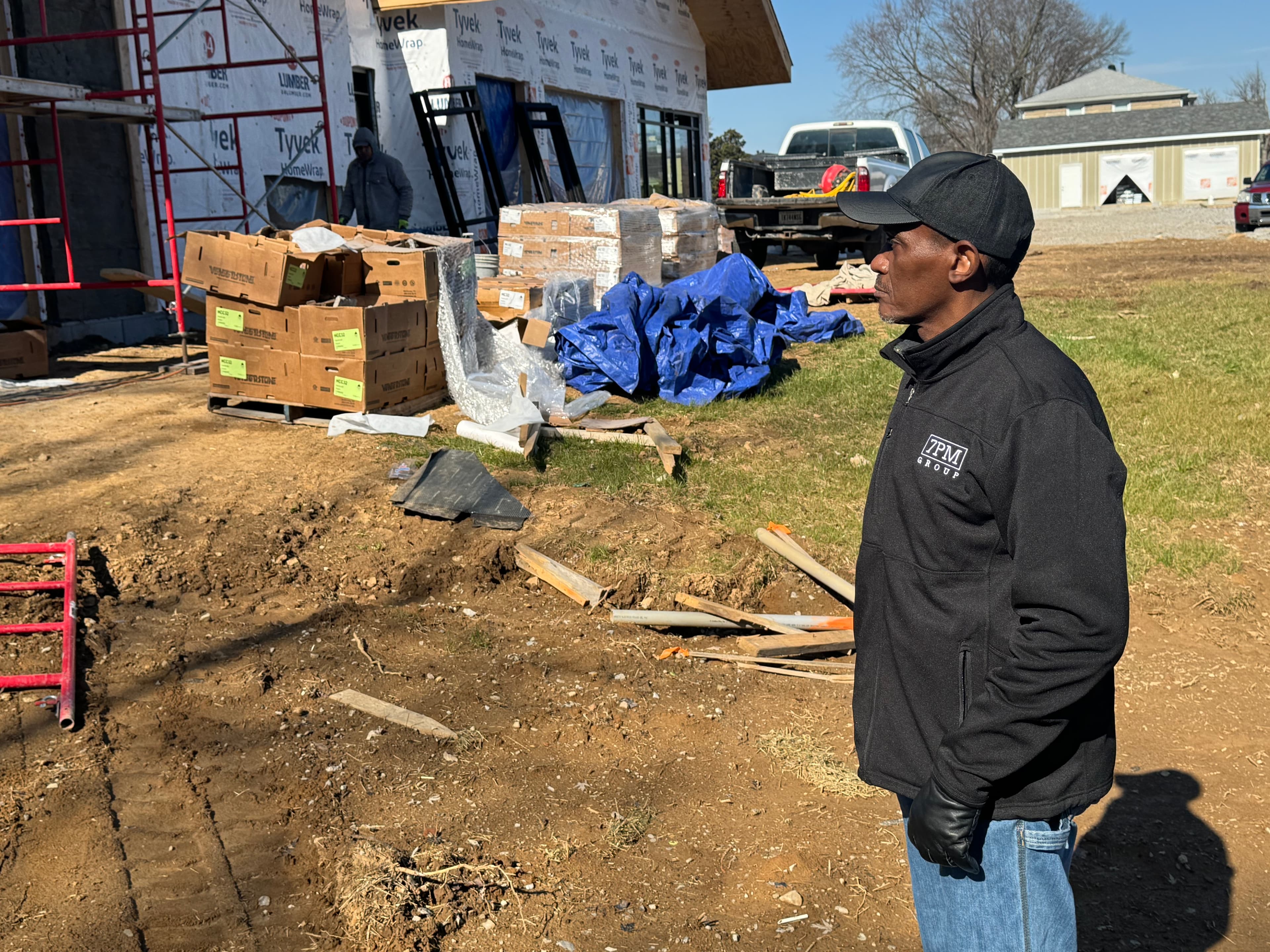
Computers and AI thrive in predictable, controlled environments. They excel when inputs are consistent and repeatable. A job site offers zero predictability. Unseasonable rain turns a foundation pit into mud; an unmapped underground utility line blocks a trench; concrete cures too quickly in high heat; a shipment of custom steel beams arrives two inches short.
While software stalls when faced with unexpected inputs, human tradespeople adapt in real time. They improvise solutions, negotiate workarounds, and read physical conditions through years of hands-on experience. Software can predict optimal conditions, but it struggles with the messy reality of the physical world.
The Myth and Reality of the Automated Job Site
At first glance, it might seem like technology is already conquering the trades. Headlines often highlight semi-automated masonry systems and large robotic arms programmed to lay bricks straight off a digital blueprint. On large-scale commercial projects with long, straight walls, these machines can churn out masonry at impressive speeds.
However, a brick-laying robot highlights the exact limits of construction tech rather than proving full automation. These machines excel at high-volume, highly repetitive tasks in controlled environments. Yet they still require human crews to prep the mortar, load materials, stage the equipment, and fix mistakes on the fly. More importantly, they represent a fraction of total construction work. They cannot easily pivot to residential remodeling, complex multi-angle architecture, tight urban infill lots, or historic restorations, where every single corner and wall is entirely unique.
The Ultimate Safety Net: Human Accountability
It is easy to view slow technology adoption as mere stubbornness or an unwillingness to change. But in construction, the stakes are physical, not digital. If a software app crashes, you refresh your screen; if a load-bearing wall fails, lives are at risk.
The slowness to adopt full automation reflects a deep truth: physical infrastructure relies on personal accountability, craftsmanship, and human judgment. Algorithms can optimize schedules and predict material costs, but they cannot replace the intuition of a foreman checking a foundation or the adaptability of a crew solving an unexpected site puzzle.
As we move deeper into an AI-driven world, construction stands as a reassuring reminder that some of the most vital work in human society still requires human hands, grit, and real-world ingenuity. The difficulty to totally digitize the construction of buildings might actually be something to celebrate?
About the author
William Brazley — Project Manager, Strategy
Besides overssing sensitve projects for 7PM Group, William is a published author.
Edited by Jules Whitfield